In countless situations, whether you are running a business, organizing an event, or even undertaking a home renovation project, navigating potential liabilities and risks is a constant challenge. Accidents can happen, and when they do, the question of who is responsible and who bears the financial burden becomes paramount. Understanding how to manage these risks effectively is not just good practice, it is essential for peace of mind and financial security.
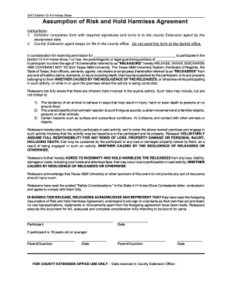
One powerful tool in risk management is the hold harmless agreement. This legal document is designed to protect one party from liability for specific risks or damages caused by another party. When combined with smart insurance planning, it becomes even more robust. This is where an insurance hold harmless agreement template becomes incredibly valuable, providing a structured starting point for drafting an agreement that specifies not only who is held harmless but also outlines necessary insurance provisions to back up that protection.
This article will guide you through the intricacies of these agreements, exploring their fundamental components, the pivotal role insurance plays, and how you can effectively utilize a template to safeguard your interests. We will delve into common scenarios where these agreements are indispensable and provide insights into ensuring they are robust and enforceable.
Understanding the Core of Hold Harmless Agreements and Their Connection to Insurance
A hold harmless agreement, often referred to as an indemnity agreement, is a contractual arrangement where one party agrees not to hold the other party responsible for any injury or damage. Essentially, it shifts the potential liability from one party (the indemnitee) to another (the indemnitor) for certain specified actions or events. This does not mean the indemnitor automatically accepts all blame; rather, it means they agree to bear the financial consequences should a claim arise from the outlined activities, thereby preventing the indemnitee from facing a lawsuit or financial loss.
The crucial connection between these agreements and insurance cannot be overstated. A hold harmless agreement does not replace insurance; instead, it works in tandem with it. While the agreement legally outlines who is responsible, insurance provides the financial backing to cover the costs associated with that responsibility. For example, if a contractor agrees to hold a homeowner harmless for an accident on the job site, and an accident occurs, the contractor’s liability insurance would typically be the primary source of funds to cover medical bills, legal fees, or damages, as stipulated in the agreement.
These agreements are widely used across various industries. You will frequently encounter them in construction contracts where general contractors might require subcontractors to hold them harmless for any accidents involving the subcontractor’s employees. They are also prevalent in real estate leases, event planning, and situations where a service provider performs work on another party’s property, helping to clarify who shoulders the risk for specific activities.
Key Elements You’ll Find in an Insurance Hold Harmless Agreement Template
When you utilize an insurance hold harmless agreement template, you will notice several standard clauses that are vital for its effectiveness:
- Identification of Parties: Clearly defines who is the Indemnitor (the one providing protection) and who is the Indemnitee (the one being protected).
- Scope of Agreement: Specifies the exact activities, projects, or timeframes during which the agreement applies, making sure the protection is for specific, foreseeable risks.
- Indemnification Clause: This is the core of the agreement, detailing what types of claims, damages, losses, or expenses the indemnitor will shield the indemnitee from. It usually includes language like “indemnify, defend, and hold harmless.”
- Governing Law: States which state’s laws will govern the interpretation and enforcement of the agreement.
- Insurance Requirements: This is a particularly important element, especially in an insurance hold harmless agreement template. It often mandates that the indemnitor carry specific types and amounts of insurance coverage (e.g., general liability, workers’ compensation) and sometimes requires naming the indemnitee as an “additional insured” on those policies. This provides direct access to the indemnitor’s insurance coverage for the indemnitee, adding another layer of financial protection.
The “insurance requirements” section is particularly critical because it transforms a simple liability shift into a financially supported one. Without adequate insurance, the indemnitor might not have the means to cover the expenses if a claim arises, rendering the hold harmless clause less effective in practice. By requiring specific insurance, the indemnitee gains assurance that potential costs can indeed be covered.
It is also important to understand that there are different forms of these agreements, typically categorized as limited, intermediate, and broad form. A limited form holds harmless the indemnitee only for the indemnitor’s negligence. An intermediate form adds protection for concurrent negligence (both parties are somewhat at fault). A broad form offers the widest protection, often holding the indemnitee harmless even for their sole negligence, though this form is less common and often restricted by law due to its extensive liability transfer.
When and How to Utilize an Insurance Hold Harmless Agreement Template Effectively
Using an insurance hold harmless agreement template is highly recommended in any situation where one party’s actions or presence could potentially create liability for another. Common scenarios include property owners engaging contractors for renovation work, event organizers renting venues, businesses leasing equipment from a third party, or individuals participating in activities with inherent risks like outdoor sports or volunteering. In each case, these templates provide a solid starting point to clarify responsibilities and mitigate risks before any work or activity begins.
To effectively utilize such a template, customization is key. Start by carefully reviewing all the clauses to ensure they accurately reflect your specific arrangement. Pay close attention to the scope of work, the identified risks, and crucially, the insurance requirements. You must tailor these details to match the specific project, the involved parties, and the laws of your jurisdiction. Never treat a template as a final, ready-to-use document without adapting it to your unique circumstances. Seek legal counsel to review the drafted agreement, ensuring it is legally sound, enforceable, and provides the protection you intend.
Ultimately, a carefully drafted and executed hold harmless agreement, especially one that integrates insurance requirements, serves as a cornerstone of effective risk management. It provides a clear understanding between parties regarding liability, reinforces the need for adequate insurance coverage, and offers a layer of protection against unforeseen financial burdens. While templates offer a strong foundation, their true value is realized when they are thoughtfully adapted and supported by legal review, ensuring that everyone involved can proceed with greater confidence and security.